

Description
descript and undiscript/ Discript and undiscripte parts of human personality. A collection of poems expressing many emotional modes by Prof. Sunil Joshi.

₹100.00
descript and undiscript/ Discript and undiscripte parts of human personality. A collection of poems expressing many emotional modes by Prof. Sunil Joshi.
5 in stock
Comparedescript and undiscript/ Discript and undiscripte parts of human personality. A collection of poems expressing many emotional modes by Prof. Sunil Joshi.
| Weight | 150 kg |
|---|---|
| Dimensions | 21.5 × 14 cm |
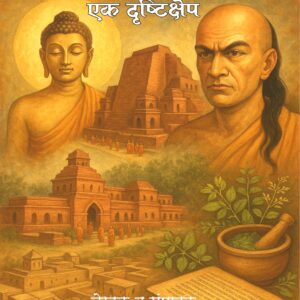
“भारतीय ज्ञान परंपरा: एक दृष्टिक्षेप” हे पुस्तक भारतभूमीच्या अखंड आणि समृद्ध बौद्धिक वारशाचा परिचय करून देणारे आहे. भारताचा इतिहास हा केवळ साम्राज्यांचे उदय-अस्त आणि युद्धांचे जय-पराजय यापुरता मर्यादित नसून, तो ज्ञान, तत्त्वज्ञान, विज्ञान, कला आणि संस्कृतीचा अखंड प्रवाह आहे. या ग्रंथातून वाचकाला वेद, उपनिषदे, पुराणकथा, प्राचीन तत्त्वज्ञान, गणित, खगोलशास्त्र, रसायनशास्त्र, धातुविज्ञान, कला, वास्तुकला तसेच तक्षशिला-नालंदा यांसारख्या विद्यापीठांची ओळख होईल.

The C.E.O. in the urban banks, credit society any other institution is an important person like the vizier in the government system. In order to be successful as C.E.O. as a chief executive officer is a difficult exercise what is his primary and important responsibility what strategies he should follow, now where and where what are the jurisdictions of his powers? All such generation answering book is made available in Marathi. The book is beneficial for the C.E.O. of today and tomorrow.

Due to amendments made in constitutional many changes in the rules of election in co-operative institutions and their references get changed. These change rules in Marathi and the original English rules both can be made known through this book. The book is useful to all co-operative institutions.

The Mathematicians who have contributed some new knowledge to the world and have proved their genius are described in this book with their respective photographs. All modern mathematicians are listed with their major contributions.

Starting from what is the gene? to what sort of fullphased change is made possible by the functions of genes is the subject of this book. One gets uptodate scientific information on all scientific aspects of working of genes in simple language with appropriate pictures. There are eight coloured pages contributed to show the steps in the discovery of genes by Dr. Pratibha Sahastrabuddhe, the writer.

The life cycle of man depends on many factors in which insects are also included. They also play a majer role either in creative or destructive manner. We get ample information about them in this book. A wonderful world of lookwarm, spider, cockroch, house fly, mosquitos, beetles is explained in simple words. Writer Prof. Sudheer Sahasrabuddhe.

Who does not favor success? But alas! it is not availed by each and everyone? Why so? Because one has to understand the mystry about the methodology about it. How can one become successful this book gives hints, tips about positive aspect and how it is to be in one’s personality In all it is a source of inspiration. Read and follow the hints like others and become successful.

This is the collection of poems as a poet fighting for social order and against corruption, inequality, unhappiness, social distress and hypocrisy. The man is his poems a fighting against all the upper said odds and dreams to get rightful effects in the form of social justice.


In this book seven important poets in Marathi with their characteristic style has been made available. The poet are freedom fighter savarkar, Anil, Fock poet Manmohan, Balkavi etc. are included. One can get ample information in this tiny book.


This is one act play of Dr. Vadyalkar based on social sequence, the dialogues is which are very interesting.

Select at least 2 products
to compare
