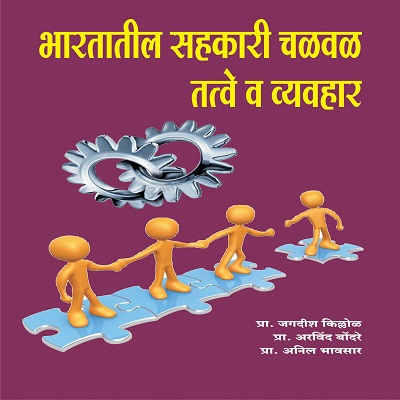
Bhartatil Sahakar Chalval : Tatve v Vyavhar

120.00

Indian co-operative movement, its principles and working on which a book is written to benefit the students of B.com Part I students of Pune university. The book is also useful for the students of yashwantrao Chavan University and also can be used by G.D.C.A. students. The workers in co-operative fields and movements also can be help from this book.

5 in stock

SKU: Bhartatil Sahakar Chalval : Tatve v Vyavhar Categories: , ,
Description

Description

Indian co-operative movement, its principles and working on which a book is written to benefit the students of B.com Part I students of Pune university. The book is also useful for the students of yashwantrao Chavan University and also can be used by G.D.C.A. students. The workers in co-operative fields and movements also can be help from this book.

Additional information

Additional information

Weight 100 kg
Dimensions 21.5 × 14 cm
More Products

Adarsh Potniyam

150.00

For Multinational co-operative there was no law available in Marathi. The above one and this (both) books have provided a helping hand to fast growing multinational institutions.

Jagtik Tapman Vadh

80.00

With the disastrous features of the modern lifestyle, how the temperature of our planet is increasing day by day is discussed in this book. The reasons behind this rise and the problems and risks and dangers that burst out of it are hinted by the writer in simple laymans language. Writer G.B. Sardesai

Roj Navin 365 Khel

120.00

There is a need of introducing new type of games in the schools, personality, development camps, institution training of games. This book 365 new games has solved this problem, by introducing interesting new games. These games have seen arranged according to the need of changing atmosphere of different seasons (rainy, winter or summer)

Barrister Saheb

200.00

Since our Bahujan icons inspire us in each and every struggle of our life, we must celebrate and propagate their work. This book is a step towards that direction. The work of Barrister Saheb is very inspiring. In the socio-political arena of independent India, we rarely come across a leader who is so dedicated to his cause as Barrister Saheb was. He carried forward Babasaheb’s legacy of simultaneous engagement with parliamentary politics and ground politics. Limiting him only to the identity of a Republican leader would be an injustice to his versatile personality. He was a parliamentarian, a barrister, a journalist, a diplomat of India’s foreign policy, a champion of the rights of the marginalized and women, a mass leader, and a staunch ideologue of Ambedkarite thought. One can feel thrilled and overwhelmed to find these many aspects within only one personality. Without an unwavering resolution to devote one’s life to the cause of the downtrodden, one cannot do such a mountain of work. This book is tribute to Barrister Saheb and his humongous work on his birth centenary year and 40th death anniversary year.